

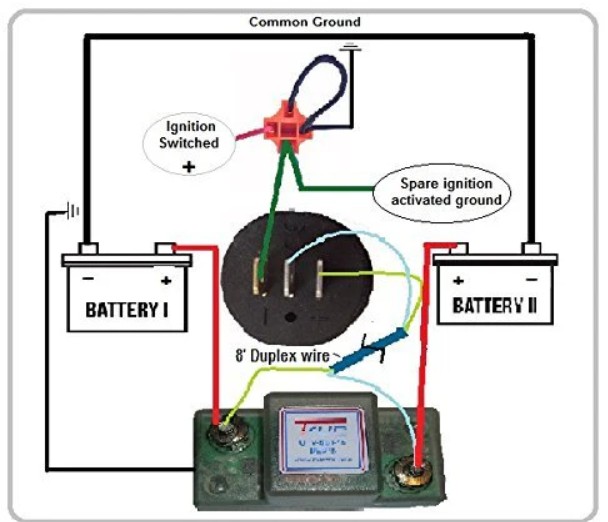
Why You Need a Fuse with the Smart Battery Isolator?
It’s one that gets overlooked way too often. Even though Smart Battery Isolators come with built-in surge protection and intelligent switching, you still need a fuse in your system.
Why a Fuse Is Absolutely Necessary
1. Protection Against Short Circuits
Smart isolators don’t prevent short circuits. If a wire gets damaged or pinched, a fuse will break the circuit instantly—before heat builds up and causes a fire. Lithium batteries can dump massive current in milliseconds, so this protection is critical.
2. Overcurrent Safeguard
Even with surge suppression, isolators don’t limit current. If a device downstream pulls more amps than your wire can handle, a fuse stops it before the wire overheats or melts.
3. Dual Battery Risk
In dual battery setups, both batteries can feed current into the same wire. That doubles the risk. Fusing each battery cable individually ensures that each side is protected.
4. Compliance with Safety Standards
Electrical codes like ABYC E-11 require fusing within 7 inches of the battery terminal. Skipping this could void warranties or insurance coverage.
5. Isolator Limitations
Smart battery isolators manage voltage and switching logic automatically—but they don’t replace physical circuit protection. Think of the isolator as the brain, and the fuse as the reflex.
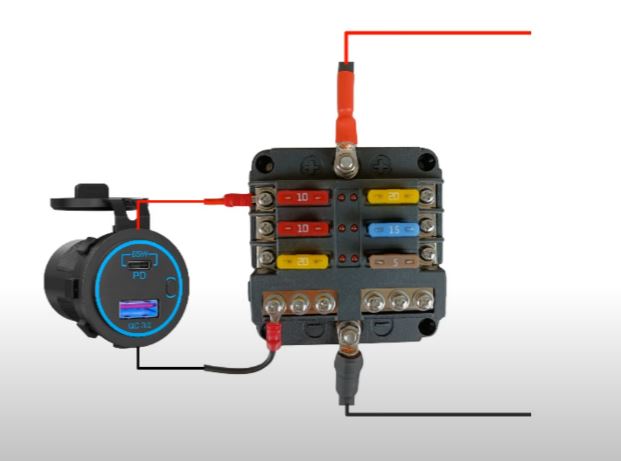 Best Practices
- Use Class T fuses for lithium systems—they’re fast and rated for high fault currents.
- Fuse each battery cable going to and from the dual battery isolator.
- Size the fuse based on your wire gauge and alternator output.
Recommended Fuse Size for 12V 140A Setup
Here’s what you need to consider:
✅ Fuse Rating
- Recommended Fuse: 150A Class T fuse
- Why? You want a fuse rated slightly above your alternator’s max output (140A) to avoid nuisance trips, but not so high that it won’t protect the wire in case of a fault.
✅ Fuse Type
- Class T Fuse: Ideal for lithium systems due to:
- High interrupt rating (can safely stop massive current)
- Fast blow characteristics
- Compact and rugged design
✅ Wire Gauge
- For 140A current, use 2 AWG or thicker copper wire.
- Always match the fuse to the wire’s ampacity—not just the alternator rating.
✅ Fuse Placement
- Install the fuse within 7 inches of the battery terminal.
- Fuse each battery cable going to and from the isolator.