

How Do I Stop My Car Battery from Dying When Car is Off?
A dead car battery is one of the most common and frustrating vehicle problems, but with proper care, it’s often preventable. Understanding how to prevent car battery from dying can save you time, money, and the inconvenience of being stranded. Simple habits and regular maintenance go a long way in extending battery life and ensuring reliable starts every day.
One of the most common causes of battery failure is excessive accessory use. Running lights, audio systems, refrigerators, winches, or chargers while the engine is off can quickly drain a single battery. This is where a dual battery system with an isolator becomes an excellent solution. An isolator allows your vehicle to use a second battery to power accessories while protecting the main starting battery. Even if the accessory battery is drained, the isolator ensures your primary battery remains fully charged to start the engine. This setup is especially useful for off-road vehicles, work trucks, campers, and vehicles used for long trips or family adventures. Adding a dual battery system is a practical and reliable approach to how to prevent car battery from dying.
To prevent your vehicle’s battery from draining or dying, especially when using additional equipment like a dual-battery setup or accessories, follow these tips:
1. Use a Smart Battery Isolator or Smart Charger
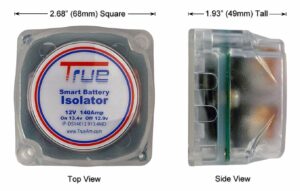
Install a smart battery isolator for dual-battery setups. It ensures the primary battery remains charged while powering accessories from the auxiliary battery. Using a battery isolator or smart charger is an effective way to prevent overcharging and ensure your vehicle’s battery system operates efficiently.
How to prevent car battery from dying? Here are the best solutions!
What is battery isolator?
A battery isolator separates the primary starting battery from the auxiliary battery, allowing both to charge independently from the alternator. This prevents one battery from draining the other. When the engine is running, the isolator ensures both batteries receive adequate charge. When the engine is off, it disconnects the batteries, protecting the starting battery from discharge due to auxiliary loads.
2. Disconnect Accessories When Not in Use
Turn off lights, inverters, or other devices when the engine is off. Use a master switch or quick-disconnect for convenience. For vehicles, consider installing a master switch to disconnect non-essential circuits easily or use a fuse box with labeled switches for specific accessories. This proactive measure not only preserves battery life but also ensures reliable performance during critical operations.
3. Check for Parasitic Drains
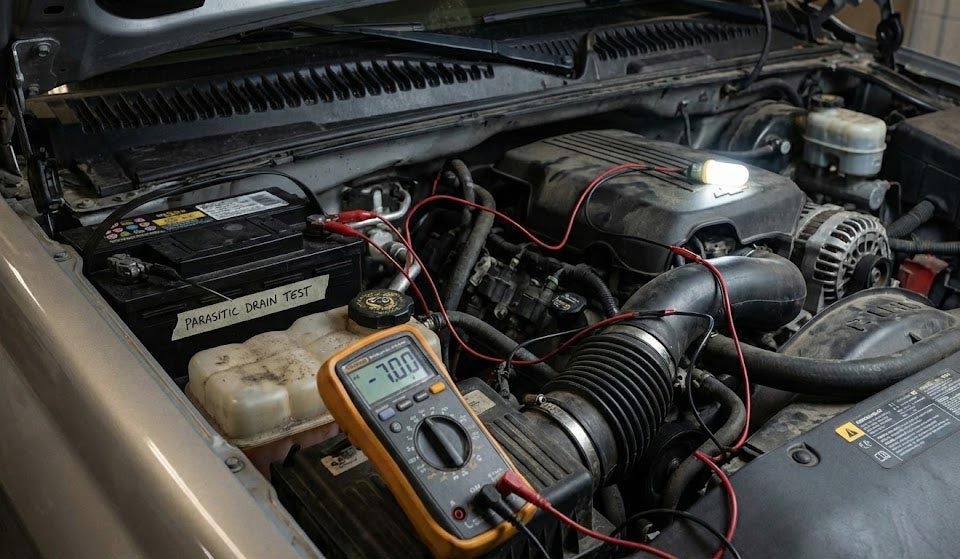
Identify and fix any parasitic drains from electronics that remain active after the vehicle is off (e.g., alarms or aftermarket systems). Parasitic drain occurs when an electrical component continues to draw power even when the vehicle or device is turned off.
Parasitic drains are unintentional power draws from a vehicle’s battery that occur even after the engine and key are turned off. These drains occur when specific electrical components remain active to maintain services such as clock memory, security systems, and onboard electronics. A minor parasitic draw is typical, but excessive drain can result in a dead battery over time.
To identify and fix such issues the steps below is the best practice.
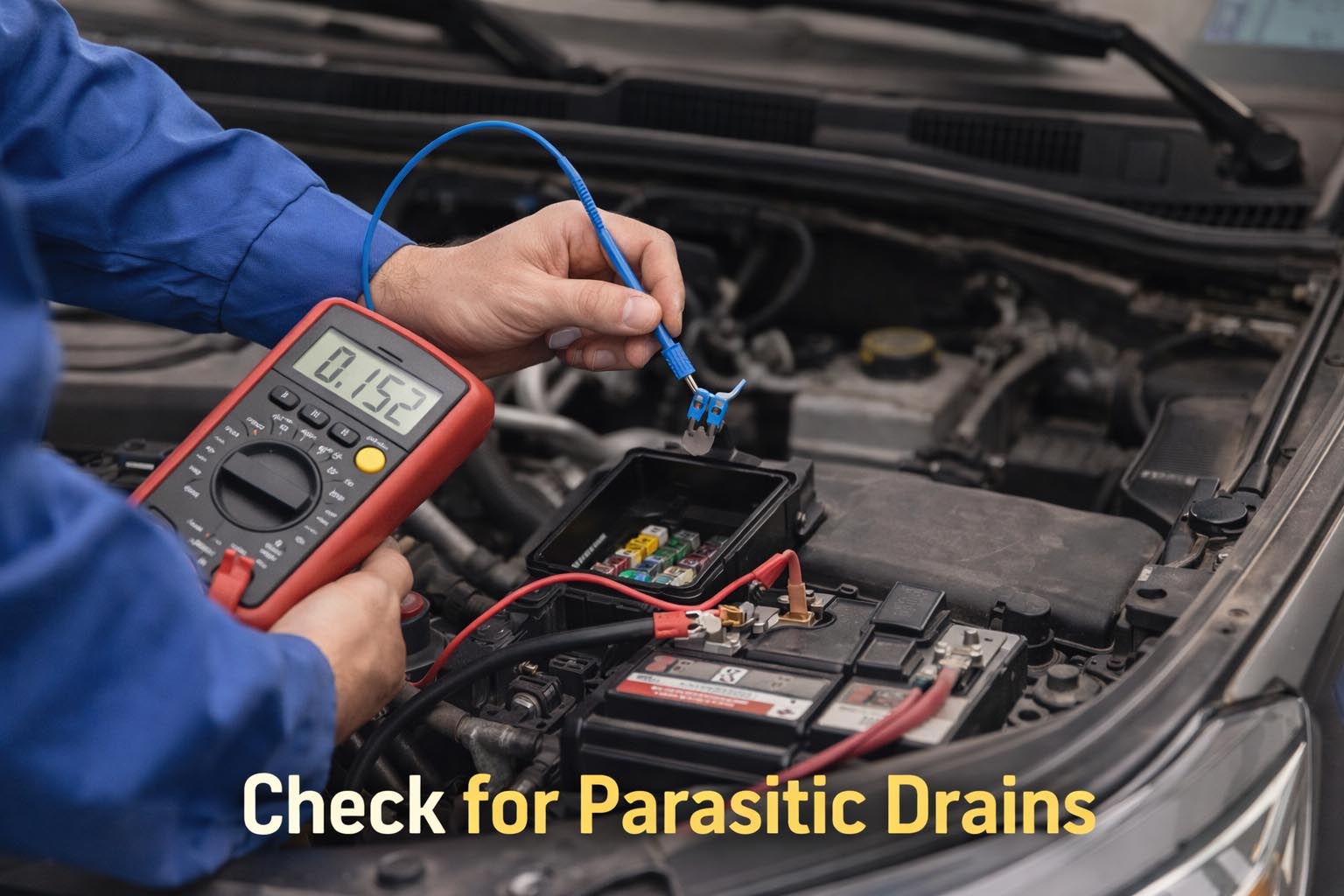
- Perform a Battery Test: To measure the draw, connect a multi-meter in series with the battery and set it to current (amperage) mode. A normal drain should be modest (typically less than 50 milliamps).
- Inspect Components: Look for malfunctioning systems, such as interior lighting, alarms, or bad wiring, that may be taking too much power.
- Fuse Check: Remove fuses one at a time while watching the current. If the drain stops, you’ve identified the issue circuit.
- Resolve issues: Repair or replace damaged components that are causing the parasitic drain.
By correcting parasitic drains, you may greatly increase the life of your battery and guarantee it delivers power when you need it the most.
4. Periodic Car Battery Maintenance
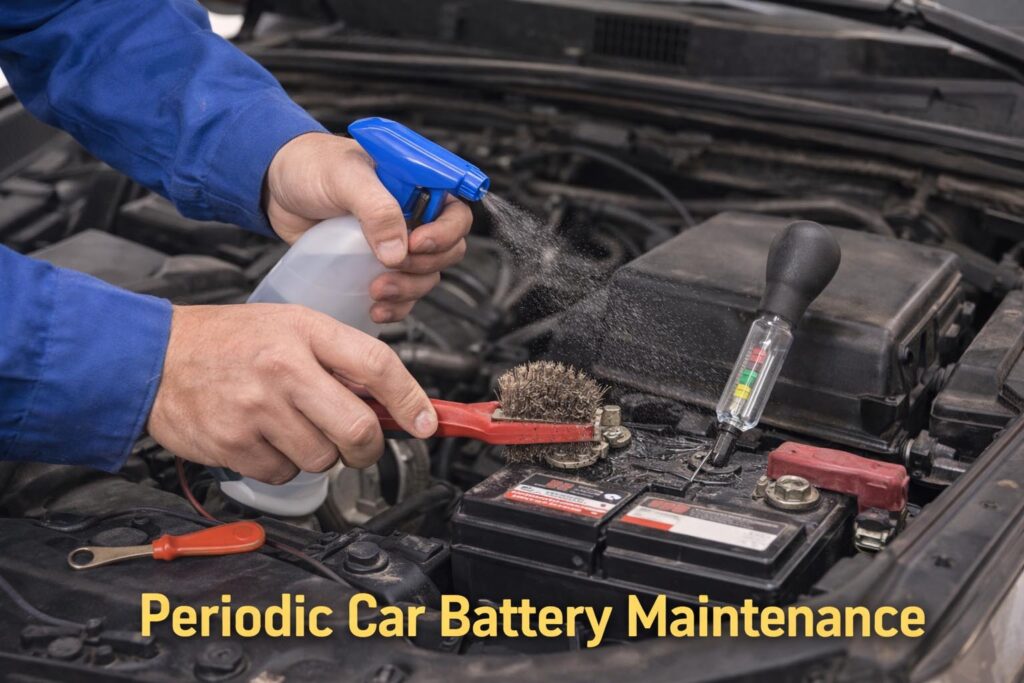
Keep terminals clean and corrosion-free. Non-sealed batteries should have their electrolyte levels checked on a regular basis. Maintaining your battery is critical to preventing accidental discharge and extending its life.
Here are some tips for optimal battery maintenance:
- Frequent Inspections: Use a solution of baking soda and water to clean terminals and check for corrosion. Make sure all connections are secure and tight.
Charge Regularly: To maintain ideal voltage levels, utilize a trickle charger or periodically charge the battery if your car or gadget isn’t used frequently. - Monitor Voltage: To determine the battery’s voltage, use a multimeter. When fully charged, a healthy automobile battery should register between 12.4 and 12.6 volts.
Prevent Deep Discharges: Over time, the battery’s capacity may be diminished if it is frequently drained to low levels.
5. Avoid Short Trips
Over time, gradual depletion may result from the alternator’s inability to fully recharge the battery due to frequent short journeys. Think about periodically taking longer drives to preserve the health of your battery. By doing this, the alternator can fully recharge the battery, maintaining its maximum capacity and extending its life.
The condition of the battery, the output of the alternator, and the electrical load in the car all affect how long it takes to fully charge a car battery. Nonetheless, a good battery that is only partially depleted can usually be recharged in 30 to 60 minutes by traveling at highway speeds (around 50 to 60 mph).
Several hours of continuous driving may be required to fully recharge a deeply drained battery, depending on the alternator’s capacity and the vehicle’s electrical load. Using accessories such as lights, air conditioning, or multimedia systems while driving can significantly reduce the alternator’s ability to charge the battery efficiently. To optimize charging, it is advisable to minimize the use of non-essential systems like air conditioning, sound systems, and other electronic devices during the drive, especially when recharging a depleted battery. This approach helps ensure the alternator’s output focuses on replenishing the battery and maintaining its health.
Keeping your vehicle’s battery healthy is essential for reliable performance. Many drivers unknowingly contribute to premature failure through simple oversights, but learning how to stop a car battery from draining is actually quite straightforward. The most common culprit is human error, such as leaving headlights, interior dome lights, or the radio on after parking. Always double-check that all electronics are switched off and that doors are fully closed to ensure no sensors stay active.
Another significant factor is “parasitic drain,” where components like alarm systems, clocks, or dashboard computers continue to draw power even when the engine is off. While a small amount is normal, faulty wiring or aftermarket accessories can pull too much energy. If you plan on leaving your vehicle parked for extended periods, investing in a smart trickle charger is a highly effective strategy.
Extreme weather also plays a role; intense heat can evaporate battery fluid, while freezing cold slows down the internal chemical reactions. Regular maintenance, such as cleaning corroded terminals and ensuring tight connections, is vital. By combining these maintenance habits with regular driving to recharge the system, you will effectively master how to stop a car battery from draining and extend the life of your battery significantly.
In General
Testing the voltage and condition of your battery on a regular basis is crucial for identifying problems early and preventing unplanned failures. When monitoring multiple battery systems, a dual voltage meter is very helpful because it provides real-time information on the condition of each battery. The lifespan of your battery can be greatly increased and a steady power supply maintained by being proactive with routine inspections and utilizing trustworthy monitoring equipment.
Finally, have your battery and charging system checked during routine servicing. A weak alternator or aging battery can fail without warning. Combining smart habits with a dual battery system and isolator gives you extra security and peace of mind. With these strategies, you’ll fully understand how to prevent car battery from dying and enjoy dependable performance every time you turn the key.
Hoping after reading this article, you stop asking anymore about how to prevent car battery from dying?