

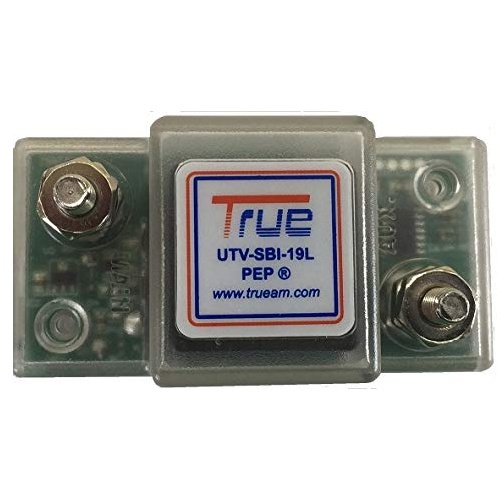
When upgrading a UTV or off-road vehicle with a dual-battery system, the “brain” behind the power management is often PEP® (Proprietary Efficiency Programming). Developed by True Amalgamated (True®), this specific programming is designed to solve the unique charging challenges posed by small-engine stator systems.
Unlike a standard car with a high-output alternator, a UTV relies on a stator that produces limited amperage. Standard battery isolators can often “flutter” or fail to charge both batteries effectively because they aren’t tuned for these lower outputs. PEP® Programming changes that dynamic.
What is PEP® Programming?
PEP® stands for Proprietary Efficiency Programming. It is a specialized firmware algorithm embedded in the True UTV-SBI series (like the SBI-15 and SBI-18). Its primary goal is to maximize the limited charging current available from a vehicle’s stator to ensure the primary (starting) battery is never compromised.
Key Functions of PEP® Voltage Sensing Thresholds: PEP® monitors the primary battery voltage. It only “cuts in” (connects the second battery) when the primary battery reaches 13.4V, ensuring the engine’s vitals are supported first.
Smart Cut-Out: If the voltage drops below 12.9V, the programming instantly isolates the batteries. This prevents accessories on the secondary battery (like winches, lights, or stereos) from draining the starting battery.
Stator Optimization: Standard isolators often require high consistent amperage to stay engaged. PEP® is tuned to the “pulsing” nature of stator outputs, preventing the relay from rapidly clicking on and off (solenoid chatter), which can heat up and damage the unit.
Why PEP® is Different from Standard VSRs?
Most generic Voltage Sensitive Relays (VSRs) are designed for automotive alternators. On a UTV, a generic VSR might sense a voltage drop and disconnect too late, or worse, engage too early and prevent the primary battery from ever reaching a full charge.
| Feature | Standard VSR | True PEP® Programming |
| Application | Universal / Automotive | UTV/ATV Stator Specific |
| Engagement | Hard voltage limit | Dynamic algorithm + 13.4V threshold |
| Efficiency | High draw to maintain connection | Low-draw efficient switching |
| Durability | Prone to chatter on low-amp systems | Anti-flutter technology |
Specialized Versions: Lead-Acid vs. Lithium
True® has further refined PEP® programming into two distinct categories to match modern battery chemistries:
- Standard PEP® (SBI-18): Programmed for Lead-Acid and AGM batteries. It uses the 13.4V cut-in and 12.9V cut-out logic typical for these 12V systems.
- Lithium PEP® (SBI-19L): Lithium (LiFePO4) batteries naturally rest at higher voltages (often 13.3V+). A standard isolator would stay “connected” even when the engine is off, eventually draining both batteries. The Lithium-specific PEP® adjusts these thresholds higher to account for the unique resting voltage of lithium cells.
Installation Benefits
Because the PEP® programming handles the “thinking,” the physical installation is simplified. The units are ambidextrous (dual-sensing), meaning it doesn’t matter which side you connect to the primary or secondary battery; the programming will detect which side is receiving the charge and distribute power accordingly.