

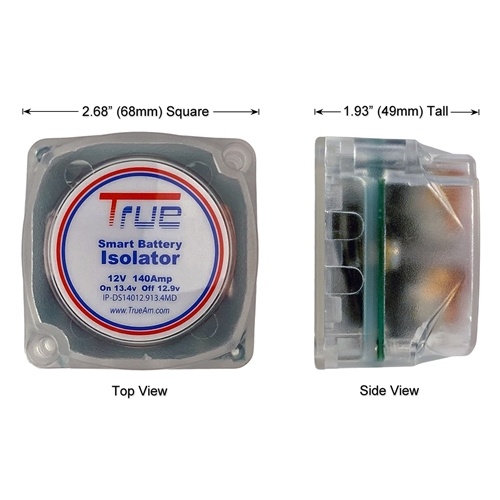
How Smart Battery Isolators Detect Alternator Charging vs Battery Voltage?
How does a smart battery isolator differentiate between alternator charging voltage and the actual voltage level of the batteries it’s monitoring? A smart battery isolator doesn’t just blindly pass along the alternator’s 14V output—it actually monitors voltage thresholds to decide when to connect or disconnect batteries.
Here’s how it works:
Voltage-Sensitive Logic
- Alternator Output (~14V): When the engine runs, the alternator produces around 13.8–14.4V. The heavy-duty battery isolator detects this rise in voltage.
- Battery Resting Voltage (~12.6V): A fully charged battery at rest sits around 12.6V. If the isolator sees voltage above a preset threshold (usually ~13.2V), it assumes the alternator is active and begins charging the auxiliary battery.
- Disconnect Threshold (~12.8V): When the engine shuts off and voltage drops below ~12.8V, the smart battery isolator for cars disconnects the batteries to prevent the auxiliary battery from draining the starter battery.
Key Concepts:
- Alternator Charging Voltage: When the engine runs, the alternator typically outputs 13.8V to 14.4V.
- Resting Battery Voltage: A fully charged 12V battery at rest sits around 12.6V to 12.8V.
How It Differentiates:
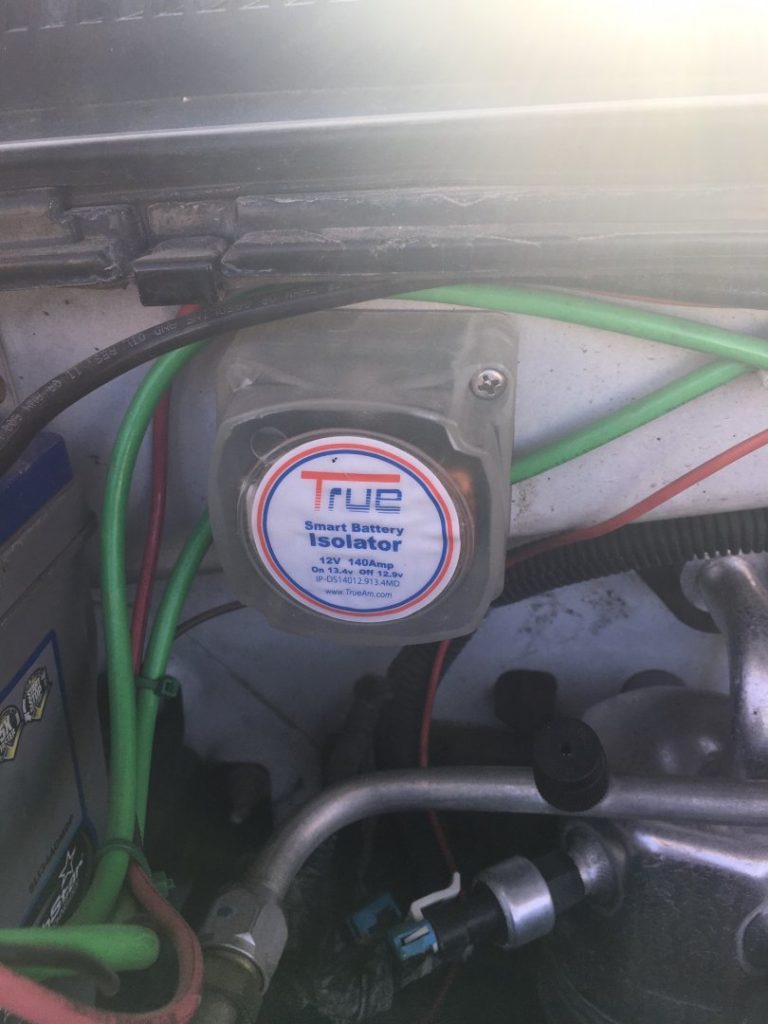 Voltage Thresholds:
- The battery isolator monitors system voltage.
- If voltage rises above a set threshold (e.g., 13.3V), it assumes the alternator is running and begins charging the auxiliary battery.
- If voltage drops below a lower threshold (e.g., 12.8V), it disconnects the batteries to prevent draining the starter battery.
- Time Delay Logic:
- To avoid false triggers (e.g., voltage spikes from solar or load changes), smart isolators often include a delay timer (e.g., 5–10 seconds) before engaging or disengaging.
- Bidirectional Sensing (in some models):
- Some isolators can detect charging from either direction (alternator or solar/DC input) and manage flow accordingly.
- Temperature Compensation (advanced models):
- Adjusts voltage thresholds based on battery temperature to prevent overcharging or undercharging.
Smart Behavior
Some smart battery isolators even delay connection for a few seconds to confirm stable voltage, avoiding false triggers from short voltage spikes. Others disconnect if voltage drops too quickly, protecting your system from over-discharge or alternator strain.
Related topics:
- Advantages of Lithium ION Battery Over Lead Acid Battery?
- Can a Smart Battery Isolator Be Better to Use Than the OEM Suzuki Battery Isolator Lead Set?
- Does the Placement of a Smart Battery Isolator Affect Performance?
- How to Wire a Voltmeter to a Battery?
- Is the True® Smart Dual Battery Kit Compatible with All Polaris General Models?