

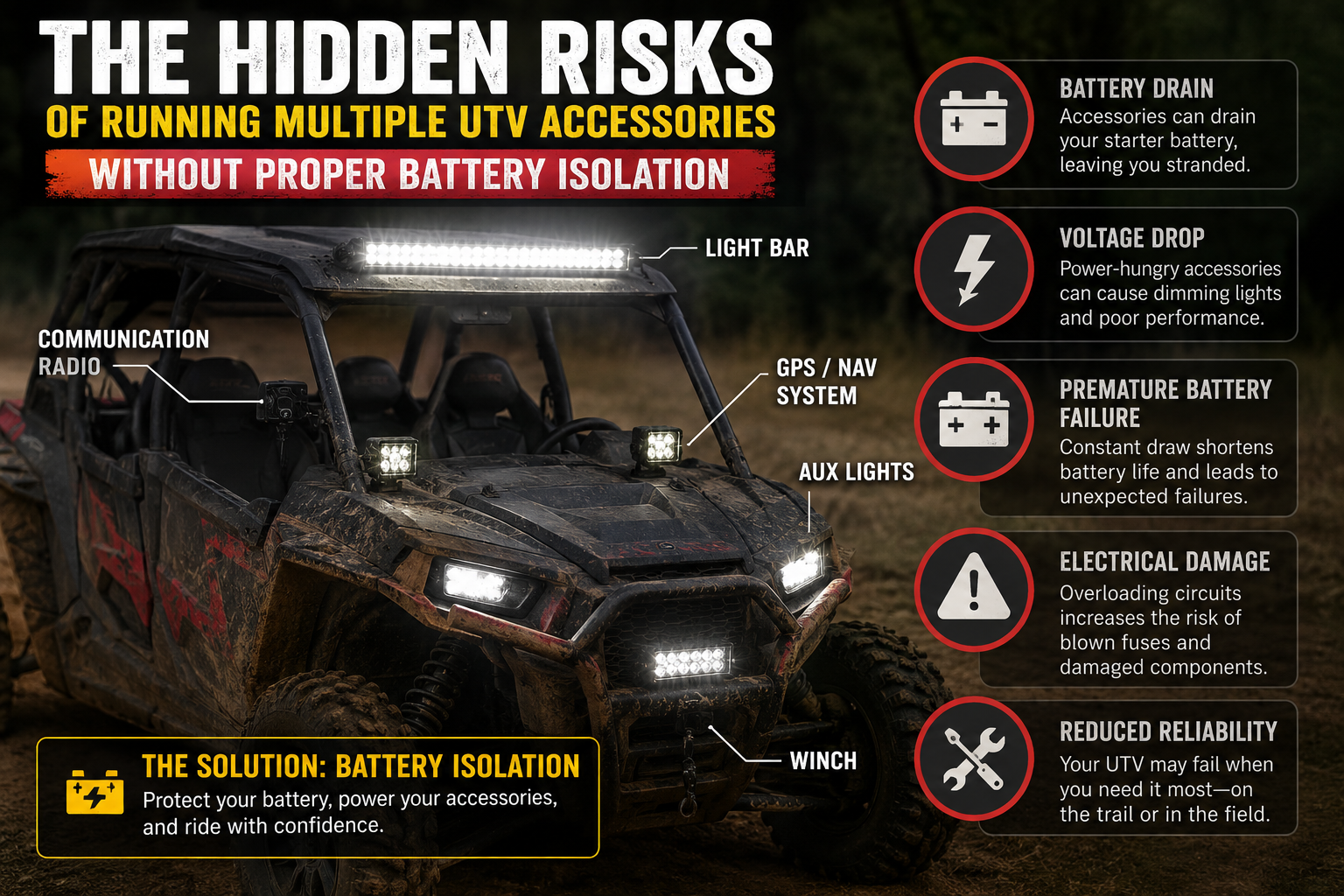
The Hidden Risks of Running Multiple UTV Accessories Without Proper Battery Isolation
Modern UTVs are no longer used only for simple trail rides or light farm work. Today’s machines are often equipped with powerful accessories such as winches, LED light bars, sound systems, GPS units, radios, air compressors, refrigeration systems, sprayers, and recovery equipment. While these upgrades improve convenience and performance, they also place significant demands on the vehicle’s electrical system.
Many UTV owners underestimate how quickly multiple accessories can overload a factory electrical setup. Without proper battery isolation, the risks go far beyond a simple dead battery. In many cases, electrical problems can lead to expensive repairs, unexpected breakdowns, and even safety concerns during off-road adventures.
Excessive accessories
One of the most common problems is excessive battery drain. Accessories that continue drawing power while the engine is off can quickly deplete the starting battery. This becomes especially dangerous during hunting trips, remote trail riding, camping, or work operations where reliable starting power is essential. A UTV stranded far from help due to electrical failure can create a stressful and potentially unsafe situation.
High-powered accessories
High-powered accessories such as winches and large lighting systems place heavy loads on the charging system. When several accessories operate simultaneously, the factory battery may struggle to supply stable voltage. Over time, this constant strain can shorten battery life and increase wear on alternators and charging components. Many owners only discover the issue after repeated battery failures or electrical malfunctions begin occurring.
Voltage drops or spikes
Voltage instability is another hidden issue that often goes unnoticed until damage has already occurred. Sensitive electronics such as GPS systems, communication devices, digital displays, and engine control modules rely on consistent power delivery. Poorly managed electrical loads can create voltage drops or spikes that interfere with performance and reliability. In some cases, repeated stress on the electrical system may damage expensive components that are costly to replace.
Improper power management
Improper power management can also affect accessory performance itself. Winches may operate slower under heavy load, lighting systems can flicker, and electronic UTV accessories may shut down unexpectedly when battery voltage drops too low. These failures are more than simple inconveniences. During nighttime riding or recovery situations, unreliable electrical equipment can become a serious safety concern.
Heat buildup within overloaded wiring systems is another overlooked risk. As electrical demand increases, undersized or poorly protected wiring may overheat. This can damage connectors, melt insulation, or create short circuits within the vehicle’s electrical system. In extreme cases, electrical failures caused by overloaded circuits may even increase the risk of fire.
Dual battery setup
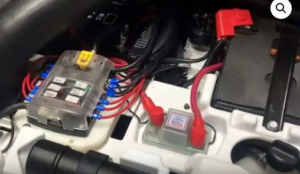
Professional battery isolation systems like True UTV battery kit are designed to help prevent these problems by separating the starting battery from auxiliary power usage. This allows accessories to operate from a dedicated secondary battery while preserving reliable starting power for the engine. Proper isolation also improves charging efficiency and helps distribute electrical loads more safely across the system.
As UTVs continue evolving into highly equipped recreational and work vehicles, electrical demands will only increase. Many factory systems were not originally designed to support large numbers of aftermarket accessories operating simultaneously for extended periods. Owners who frequently use power-hungry equipment often benefit from professionally designed dual battery systems that are built specifically for off-road conditions.
Reliable electrical performance has become an essential part of modern UTV ownership. Whether the vehicle is used for trail riding, overlanding, hunting, ranch work, or recovery operations, power management plays a critical role in overall reliability and safety. Ignoring the strain placed on the electrical system can eventually lead to breakdowns, damaged electronics, and costly downtime.
Understanding the hidden risks of improper battery isolation helps UTV owners recognize the importance of professional-grade electrical solutions. A properly managed dual battery setup not only protects the vehicle’s starting system but also supports the long-term reliability of valuable accessories and electronics.
Related post:
- Step-by-Step DIY: How to Install a 12V Dual Battery System in Toyota Prado Using True® Isolator Kit
- The “9V Shift Fail”: Protecting the Honda Pioneer Transmission
- Maintenance Tips for Your Dual Battery Setup for Truck
- Top 10 Side-by-Side UTV for Family
- Does Land Rover Discovery need True Smart Battery Isolator Kit?
- How Do You Prevent Battery Cable Corrosion?
- Why Dodge RAM® Needs Dual Battery Kit 1500 2500 and a Wiring Diagram, 12V 140A Isolator System
- Why Toyota Tundra need Dual Battery Kit?
- Why the Lexus GX 470 Needs a Dual Battery Isolator
- Why the Jeep CJ7 Needs a True Dual Battery Kit for Reliable Power – Fit for CJ5 CJ6 CJ7 CJ8