

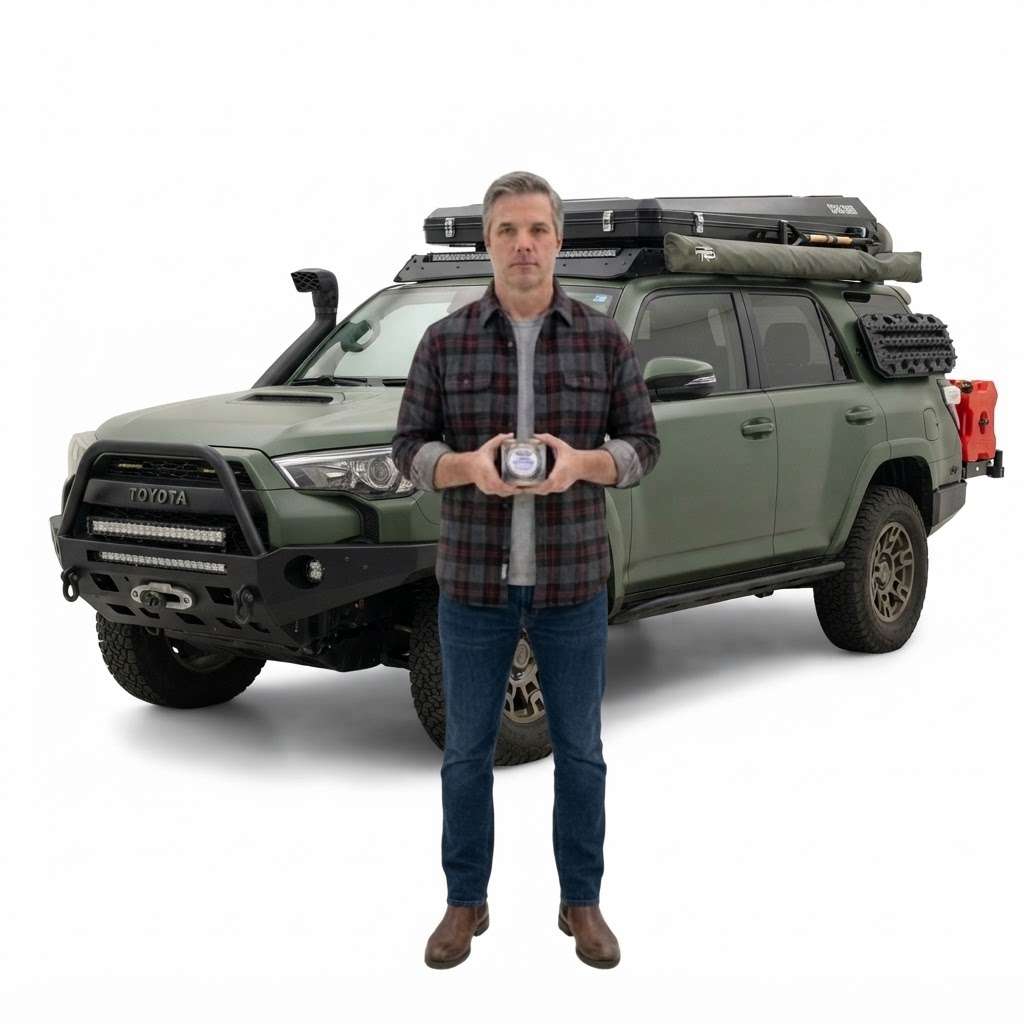
When Does an Overlanding 4Runner Actually Need a Dual Battery Kit?
An overlanding Toyota 4Runner can easily get by with its factory single-battery setup for weekend trips, but it crosses into dual battery territory the moment your power draw outpaces what the alternator can replenish while driving, or when you risk draining your primary starting battery while parked in remote backcountry.
Evaluating your setup against specific power thresholds, electrical loads, and trip profiles clarifies whether a dual battery kit is an absolute necessity or an unnecessary expense
A dual battery kit earns its place when your accessory load starts competing with your ability to start the truck. For a lot of 4Runner builds, it’s not needed at all. Here’s how to tell which camp you’re in.
You probably don’t need one if:
- Your electrical use is light: phone charging, a few LED lights, a dash cam, maybe a small inverter for short bursts.
- You’re running a compressor only occasionally (it draws heavily but briefly, and only with the engine on).
- Your trips are mostly drive-and-camp, with the engine running for hours each day to recharge the starter battery.
- You rarely sit parked with accessories on for long stretches.
You probably do need one if:
- You run a 12V fridge/freezer overnight. This is the most common trigger. A typical compressor fridge averages around 0.5 to 1.5 amp-hours per hour depending on ambient temperature, so 12 to 36 Ah a day. Over a multi-day stop with a short drive between camps, that can drain a starter battery fast.
- You camp stationary for several days (basecamp style, remote trailheads, hunting or fishing spots) and the engine isn’t running much.
- You power a laptop, camera gear, or a Starlink or other remote-work setup from the vehicle.
- You run a rooftop tent with lighting, a fan, or a heater, plus other accessories at night.
- You have a winch. Strictly, this calls for a strong starter battery rather than a dual setup, but if you’re also adding house loads, a proper second battery system keeps things cleaner.
- You travel remotely enough that a dead battery is a real problem, not an inconvenience. Isolation is a safety feature there, because your starting battery stays untouched no matter what you do with accessories.
The real rule of thumb: if you’re regularly using more than about 20 to 30 Ah between drives, or you can’t afford any risk of being unable to start, a separate house battery is worth it. A starter battery is designed to deliver a big burst of current, not to be deeply discharged repeatedly, so using it as a house bank shortens its life even if it never fully dies.
Alternatives to consider first:
- A portable power station (Jackery, EcoFlow, Bluetti, Anker, etc.). Plug-and-play, no wiring, removable, and it can run your fridge. For many people this is the better answer, especially if you want to keep the truck’s electrical system stock.
- A battery isolator or a low-voltage cutoff on the existing battery, which gives you some protection against draining it to the point of not starting. It’s a partial solution, but cheap.
- A jump pack as a backup plan.
4Runner-specific notes:
- Under-hood space is tight, especially on 5th gen models, so many people mount the second battery in the cargo area or on a rear panel/drawer system instead, which means longer cable runs and thicker wire.
- Newer 4Runners have more sensitive electronics, so a stock alternator charging a second battery through a DC-DC charger (rather than a simple isolator) is the cleaner approach. It protects the alternator and charges lithium batteries properly.
- If you go lithium (LiFePO4) for the house battery, you need a DC-DC charger. A basic relay-type isolator won’t charge it correctly.
Quick decision guide:
| Situation | Recommendation |
|---|---|
| Weekend trips, no fridge | Skip it |
| Fridge + moving camp daily | Probably fine without, add a low-voltage cutoff |
| Fridge + multi-night stationary stays | Get a dual battery or power station |
| Remote work, Starlink, heavy loads | Dual battery with DC-DC charger and lithium |
If you tell me what accessories you run and how you typically camp, I can help estimate your daily amp-hour use and whether a kit or a power station makes more sense.