

Electric Cars Still Have 12V Batteries—So Where Does a Battery Isolator Fit?
Electric vehicles have transformed the automotive industry, replacing traditional gasoline engines with electric motors and high-voltage battery packs. But despite these major changes, one familiar component remains: the 12V battery. This smaller battery continues to play an important role in many electric vehicles, raising an interesting question for drivers who need additional electrical power: where does a battery isolator fit into an electric vehicle power system?
Understanding the difference between an EV’s high-voltage traction battery and its low-voltage electrical system is essential before considering an auxiliary battery or battery isolator.
Electric Vehicles Still Need Low-Voltage Power
An electric vehicle’s main battery pack supplies the high voltage required to operate the electric motor and propulsion system. However, the vehicle also has numerous lower-voltage electrical components, including control modules, lighting, displays, communication systems, safety electronics and other accessories.
The 12V battery helps support these low-voltage systems. This means an EV can still experience problems when its 12V battery becomes discharged, even though the vehicle’s main high-voltage battery may have plenty of stored energy.
This distinction is important because the 12V battery is not the same as the EV’s propulsion battery.
Where Does a Battery Isolator Fit?
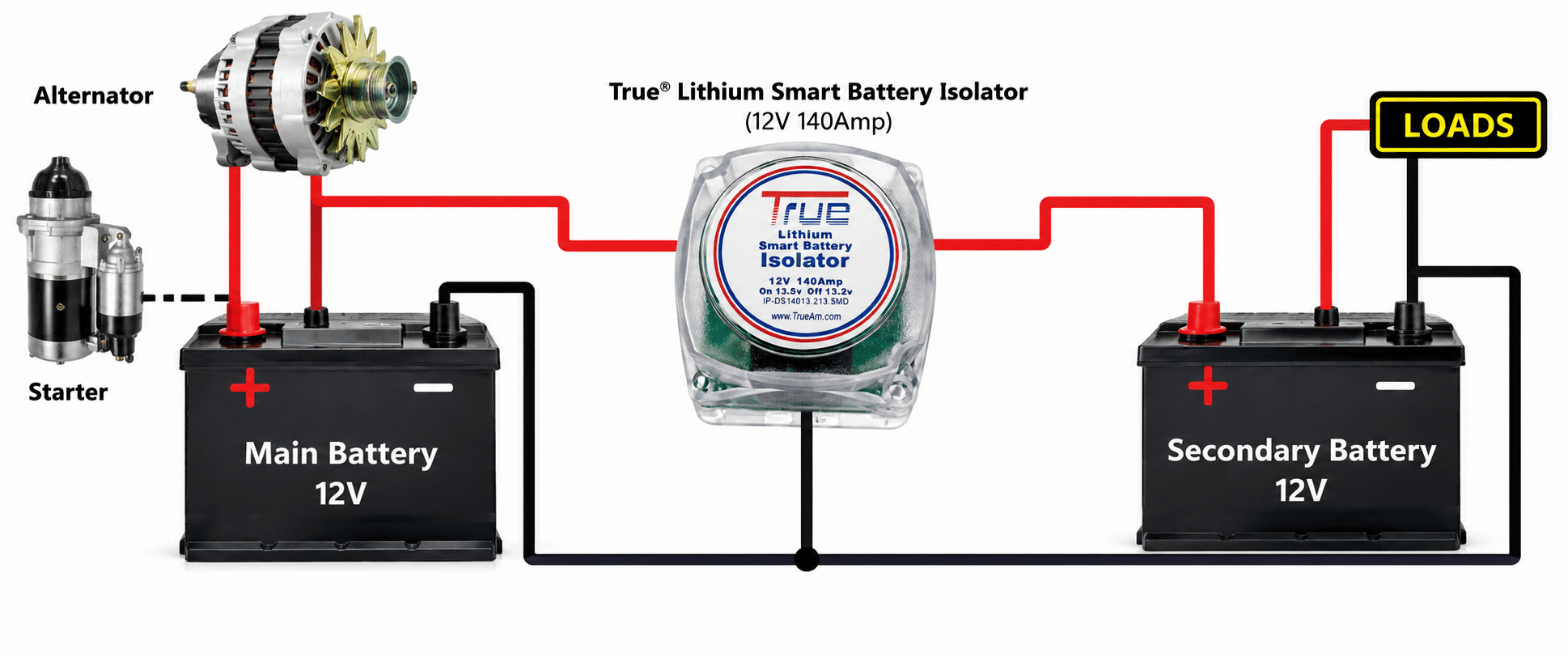
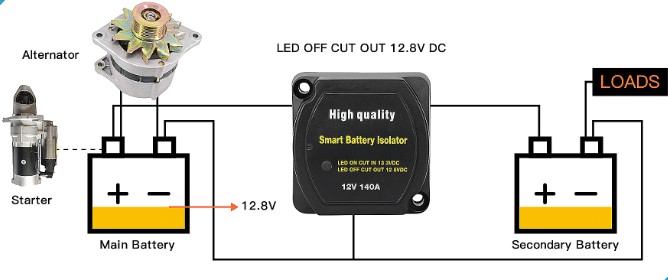
A traditional automotive battery isolator is designed to manage separate batteries so that one battery can supply accessories without unnecessarily draining another battery. In conventional vehicles, this commonly means separating the starting battery from an auxiliary battery.
For example, an off-road vehicle may have a starting battery for engine starting and a second battery for LED lighting, a refrigerator, communications equipment, a winch or other accessories. A smart battery isolator can help manage the relationship between those batteries.
The concept becomes more specialized in an electric vehicle. A conventional battery isolator should not be treated as a device for controlling or isolating the EV’s high-voltage traction battery. High-voltage EV systems require dedicated battery-management and safety systems designed specifically for that purpose.
Auxiliary Power for Electric Vehicles

Where battery isolation can become interesting is with auxiliary 12V power.
EV owners who use their vehicles for camping, overlanding, work or outdoor activities may have substantial accessory demands. Refrigerators, communication equipment, lighting, cameras, navigation equipment and other electronics can place additional demands on the low-voltage electrical system.
An appropriately designed auxiliary battery system can provide another source of low-voltage power for specialized applications. Battery isolation can then help separate accessory loads from the vehicle’s primary low-voltage battery.
However, compatibility is critical. EV electrical architectures vary considerably between manufacturers and models, so an auxiliary battery system must be designed around the vehicle’s specific charging and low-voltage system.
The Future of Automotive Battery Management

As more vehicles become electrified, vehicle power management is becoming increasingly important. The conversation is no longer limited to starting an engine. Modern vehicles may operate dozens of electronic systems while supporting increasingly sophisticated accessories.
For conventional vehicles, hybrids and certain specialized EV applications, auxiliary batteries and intelligent isolation technology can provide useful solutions when additional low-voltage power is required.
The key is understanding which battery is being managed and what role it plays. A battery isolator belongs in the low-voltage auxiliary power conversation—not as a replacement for the sophisticated high-voltage battery-management system found in an electric vehicle.
As automotive technology continues moving toward electrification, smart power management will remain an important part of keeping vehicle electronics, accessories and auxiliary systems operating reliably.
Recent Posts
- Electric Cars Still Have 12V Batteries—So Where Does a Battery Isolator Fit?
- The Architecture and Function of Smart Battery Isolators
- From Workhorse to Adventure Rig: The Honda Pioneer Transformation
- Tools and Supplies Needed Before Starting UTV Dual Battery Kit Installation
- How to Calculate Your UTV’s Power Draw for Accessories
- Solar Charging Addons to Complement a Dual Battery Setup
- What are the best spots for off-roading in Alabama
- Upgrading Your Auxiliary Car Battery Installation Kit from AGM to Lithium (LiFePO4)
- Top 10 Best UTV Trails in Connecticut and Nearby States for Every Off-Road Adventure
- Seasonal Riding: Best Michigan UTV Trails by Season