

When upgrading your Honda Pioneer with a dual battery system, choosing the right battery isolator is important. A battery isolator helps manage power between your primary and auxiliary batteries, allowing you to use additional electrical accessories without unnecessarily draining your starting battery.
Two common options are automatic and manual battery isolators. Although both serve the same general purpose, they operate differently and offer different levels of convenience and control. Understanding how each type works can help you choose the right Honda Pioneer battery isolator for your needs.
What Is an Automatic Battery Isolator?
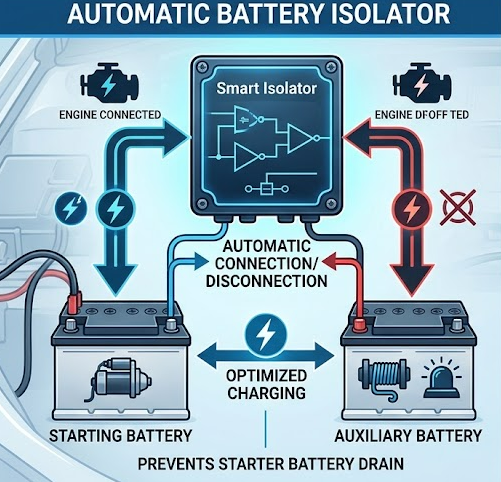
An automatic battery isolator manages the connection between two batteries without requiring manual operation. It monitors the battery voltage and automatically connects or separates the batteries depending on specific voltage levels.
When the engine is running and the charging system produces sufficient voltage, the isolator connects the auxiliary battery so it can receive a charge. When the engine is turned off and the voltage drops, it separates the batteries to help prevent electrical accessories from draining the starting battery.
One of the main advantages of an automatic battery isolator is convenience. Honda Pioneer owners can operate additional accessories without constantly worrying about manually connecting or disconnecting their batteries. It is particularly useful for riders who frequently use LED light bars, radios, and other electrical equipment during off-road adventures.
What Is a Manual Battery Isolator?
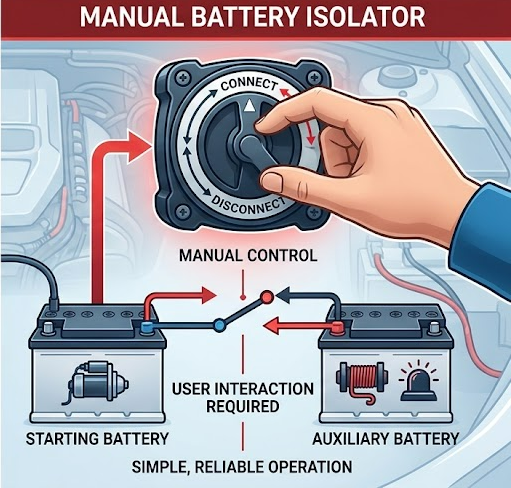
A manual battery isolator requires the user to control when the batteries are connected or separated. Unlike automatic models, it does not independently manage battery connections based on voltage. Instead, the driver operates the system using a switch or manual control, depending on the setup.
This type of isolator gives Honda Pioneer owners more direct control over their dual battery system. It allows them to decide when to connect or disconnect the auxiliary battery based on their power requirements.
However, manual operation requires attention. Forgetting to disconnect the batteries when the engine is off may cause unnecessary battery drain, depending on how the system is wired. This option is generally suitable for users who prefer hands-on control over their vehicle’s electrical system.
What Are the Main Differences Between Automatic and Manual Battery Isolators?
The biggest difference between automatic and manual Honda Pioneer battery isolators is how they manage battery connections. Automatic isolators use voltage-based operation to connect and separate batteries, while manual isolators depend on the user to control the process.
In terms of convenience, automatic battery isolators are generally easier to operate because they manage battery connections without requiring constant attention. They are a practical choice for Honda Pioneer owners who regularly use multiple electrical accessories.
Manual battery isolators, on the other hand, provide more direct control over battery management. However, they require users to remember when to operate the switch to help prevent unnecessary battery drain.
Both options can support a dual battery setup, but the right choice depends on your electrical needs, riding habits, and personal preferences.
Which Battery Isolator Is Better for Your Honda Pioneer?
Choosing between an automatic and manual battery isolator depends on how you use your Honda Pioneer. If you frequently go off-roading and rely on electrical accessories such as LED lights, radios, and other equipment, an automatic battery isolator may be the more convenient option.
Its automatic operation helps manage battery connections and reduces the need for manual adjustments. This allows you to focus more on your outdoor activities while maintaining a reliable power supply for your accessories.
However, if you prefer controlling your battery connections yourself, a manual battery isolator may be a suitable option. It provides direct control over your auxiliary battery and can work well for users who understand their electrical setup.
Before purchasing, consider your Honda Pioneer model, battery type, charging system, and electrical requirements. Make sure the isolator you choose is compatible with your specific setup.
Both automatic and manual battery isolators offer useful benefits for Honda Pioneer owners with dual battery systems. Automatic isolators provide convenience through voltage-based operation, while manual isolators offer greater control over battery connections.
Understanding these differences can help you choose the right Honda Pioneer battery isolator for your needs. Whether you prioritize convenience or manual control, selecting a compatible isolator can help improve accessory power management and reduce the risk of draining your starting battery during off-road adventures.