

Solar Charging Addons to Complement a Dual Battery Setup
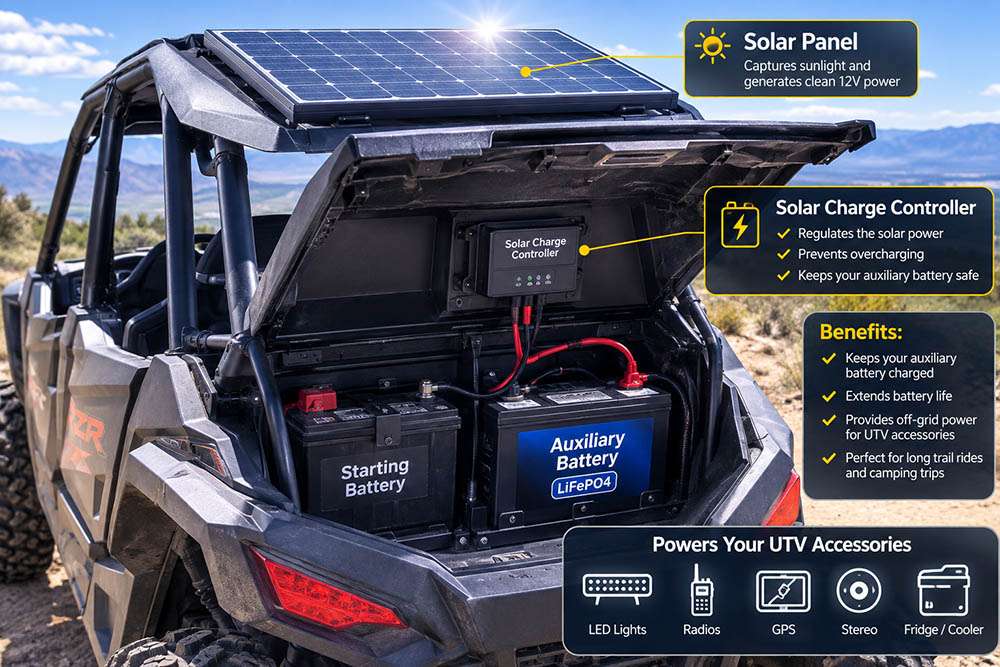
A UTV dual battery setup provides additional electrical capacity for off-road accessories, but extended trips can still place heavy demands on an auxiliary battery. Adding solar charging equipment can provide another source of energy when riding, camping, or exploring away from traditional power sources. A properly planned solar charging system for a UTV can complement a dual battery kit and help maintain battery charge during extended outdoor adventures.
Why Add Solar Charging to a UTV Dual Battery System?
UTVs are increasingly equipped with LED light bars, radios, GPS units, cameras, refrigerators, sound systems, and other electronic accessories. While a UTV dual b
Smart Battery kit separates accessory power from starting power, continuous electrical loads can eventually reduce the auxiliary battery’s available capacity.
Solar charging provides an additional way to replenish energy during periods when the UTV is parked or operating in suitable sunlight. Instead of relying entirely on the vehicle’s charging system, solar panels can contribute supplemental energy to the battery bank.
This can be especially useful for UTV camping, overlanding, hunting, remote trail riding, and multi-day off-road trips.
Choosing the Right Solar Panel
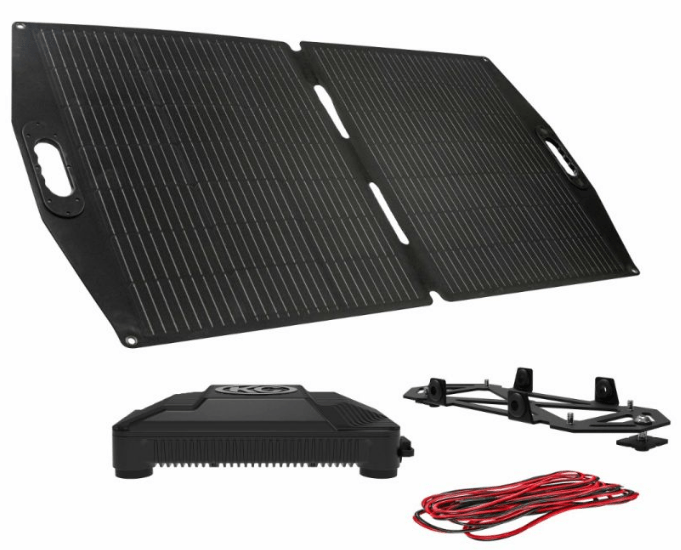
Solar panels are available in different sizes and configurations. The appropriate size depends on your auxiliary battery capacity, accessory usage, available mounting space, and expected sunlight exposure.
Portable folding solar panels can be useful for camping because they can be positioned toward the sun when the UTV is stationary. Smaller rigid panels may be suitable for permanent mounting on a roof, cargo rack, or another appropriate location.
The goal is not necessarily to replace the UTV charging system but to provide supplemental battery charging when additional energy is needed.
Use a Solar Charge Controller
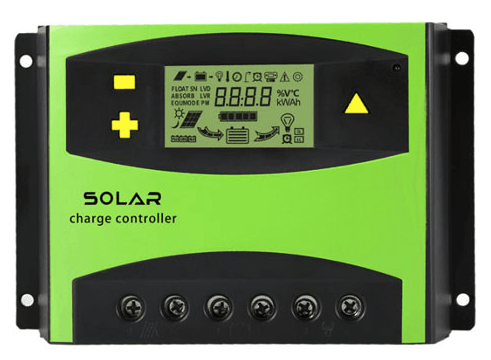
A solar charge controller is an important component between the solar panel and battery. It regulates the energy produced by the panel and helps provide appropriate charging conditions for the battery.
MPPT and PWM are two common controller technologies. MPPT controllers can generally extract energy more efficiently from a solar panel under varying conditions, while PWM controllers are typically simpler and may be suitable for smaller systems.
When using lithium or LiFePO4 batteries, make sure the selected controller supports the battery manufacturer’s recommended charging requirements.
Solar Charging and Your Auxiliary Battery
Solar charging can work particularly well with an auxiliary battery because the battery can be dedicated to powering accessories. A UTV battery isolator or appropriate battery-management strategy can help keep the primary starting battery protected while the auxiliary battery handles accessory loads.
However, solar charging should be treated as a supplemental power source. Cloud cover, shading, panel orientation, temperature, and limited daylight can significantly affect actual solar production.
Build a More Self-Sufficient UTV Power System
Combining a UTV dual battery kit with solar charging can create a more flexible electrical system for extended off-road use. The dual battery setup provides additional energy storage and separates accessory loads from starting power, while solar panels can help replenish the auxiliary battery when sunlight is available.
Before adding solar equipment, calculate your expected accessory power consumption and determine how much energy your auxiliary battery needs. Then select compatible solar panels, charging equipment, wiring, and battery components.
For riders who spend multiple days away from conventional power sources, solar charging addons can be a practical complement to a UTV dual battery system, helping keep essential accessories powered while reducing dependence on external charging sources.