

A Complete Guide in Selecting High-Quality Golf Cart Battery Cables for Maximum Performance
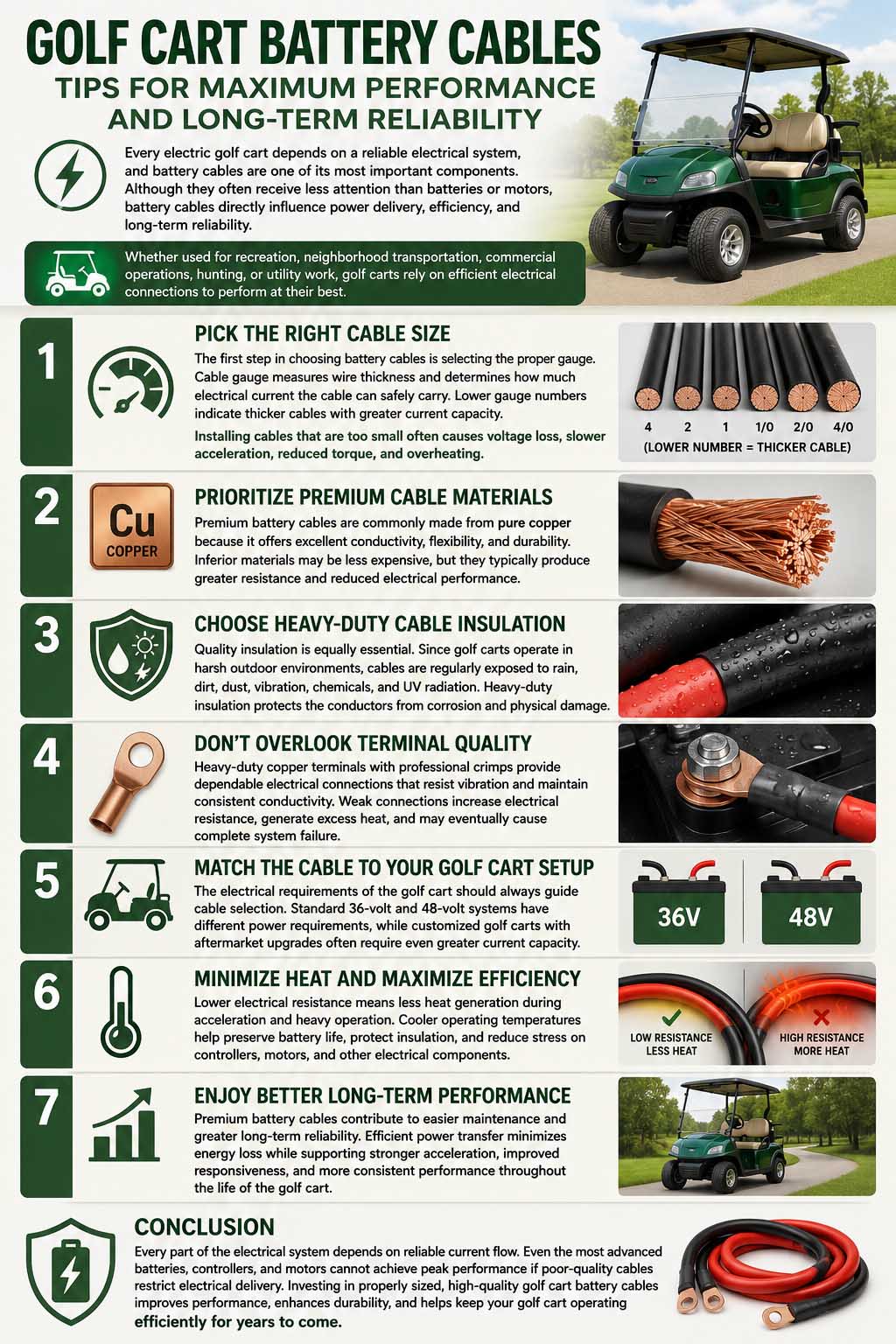
Every electric golf cart depends on a reliable electrical system, and battery cables are one of its most important components. Although they often receive less attention than batteries or motors, battery cables directly influence power delivery, efficiency, and long-term reliability.
Whether used for recreation, neighborhood transportation, commercial operations, hunting, or utility work, golf carts rely on efficient electrical connections to perform at their best.
Pick the Right Cable Size
The first step in choosing battery cables is selecting the proper gauge. Cable gauge measures wire thickness and determines how much electrical current the cable can safely carry. Lower gauge numbers indicate thicker cables with greater current capacity.
Installing cables that are too small often causes voltage loss, slower acceleration, reduced torque, and overheating.
Prioritize Premium Cable Materials
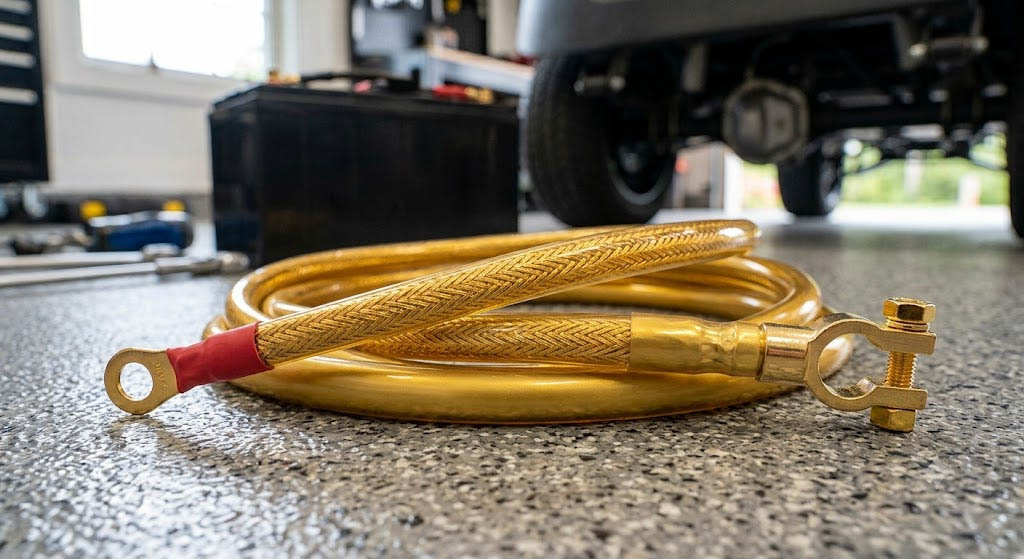
Premium battery cables are commonly made from pure copper because it offers excellent conductivity, flexibility, and durability. Inferior materials may be less expensive, but they typically produce greater resistance and reduced electrical performance.
Choose Heavy-Duty Cable Insulation
Quality insulation is equally essential. Since golf carts operate in harsh outdoor environments, cables are regularly exposed to rain, dirt, dust, vibration, chemicals, and UV radiation. Heavy-duty insulation protects the conductors from corrosion and physical damage.
Don’t Overlook Terminal Quality
Heavy-duty copper terminals with professional crimps provide dependable electrical connections that resist vibration and maintain consistent conductivity. Weak connections increase electrical resistance, generate excess heat, and may eventually cause complete system failure.
Match the Cable to Your Golf Cart Setup
The electrical requirements of the golf cart should always guide cable selection. Standard 36-volt and 48-volt systems have different power requirements, while customized golf carts with aftermarket upgrades often require even greater current capacity.
Minimize Heat and Maximize Efficiency
Lower electrical resistance means less heat generation during acceleration and heavy operation. Cooler operating temperatures help preserve battery life, protect insulation, and reduce stress on controllers, motors, and other electrical components.
Enjoy Better Long-Term Performance
Premium battery cables contribute to easier maintenance and greater long-term reliability. Efficient power transfer minimizes energy loss while supporting stronger acceleration, improved responsiveness, and more consistent performance throughout the life of the golf cart.
Conclusion
Every part of the electrical system depends on reliable current flow. Even the most advanced batteries, controllers, and motors cannot achieve peak performance if poor-quality cables restrict electrical delivery. Investing in properly sized, high-quality golf cart battery cables improves performance, enhances durability, and helps keep your golf cart operating efficiently for years to come.
Related topics:
- How to keep battery terminals from corroding
- Why Dead Batteries Are Common in Accessory-Loaded UTVs
- How Battery Isolators Improve Electrical Safety in Modified Vehicles
- The Hidden Risks of Running Multiple UTV Accessories Without Proper Battery Isolation
- Step-by-Step DIY: How to Install a 12V Dual Battery System in Toyota Prado Using True® Isolator Kit
- The “9V Shift Fail”: Protecting the Honda Pioneer Transmission
- Maintenance Tips for Your Dual Battery Setup for Truck
- Top 10 Side-by-Side UTV for Family
- Does Land Rover Discovery need True Smart Battery Isolator Kit?
- How Do You Prevent Battery Cable Corrosion?