

Tips and Tricks for Off-Roading in Alabama
Alabama is a hidden gem for off-road enthusiasts. From the rugged trails of Talladega National Forest to the mud pits at Top Trails OHV Park, the state offers a wide variety of terrain for Jeeps, trucks, ATVs, and UTVs.
To make the most of your adventure, it’s important to prepare properly. Below are some essential tips and tricks for off-roading in Alabama that will help you stay safe, protect your vehicle, and maximize the fun.
 Vehicle Preparation
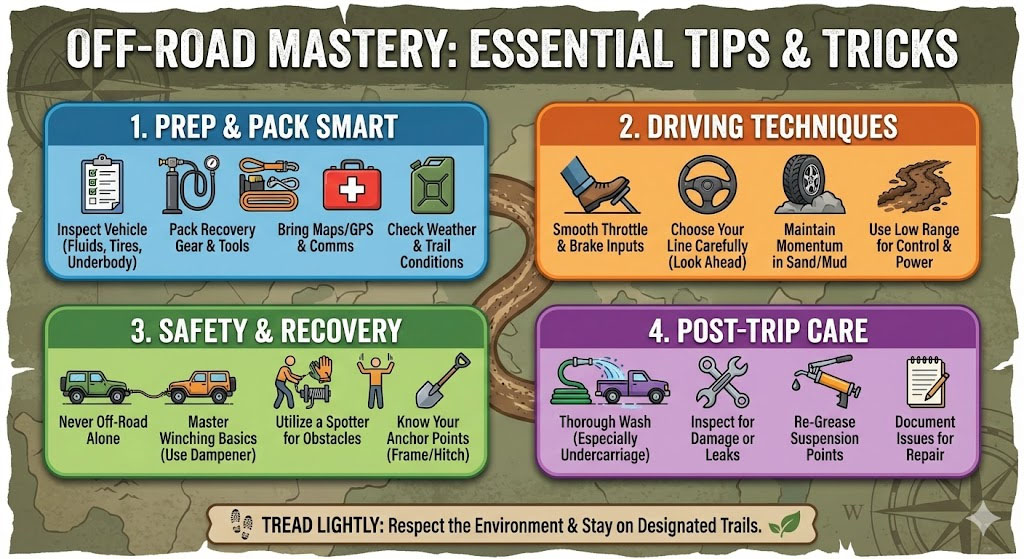
One of the most important tips and tricks for off-roading in Alabama is to ensure your vehicle is trail-ready. Check your fluids, brakes, and suspension before heading out. Airing down your tires can improve traction on mud and rocky paths, while carrying a full-size spare tire is a must.
Recovery Gear
Another crucial point in the list of tips and tricks for off-roading in Alabama is to always carry recovery gear. A tow strap, winch, shovel, and traction boards can save you from being stranded. Traveling with a buddy vehicle adds an extra layer of safety.

Electrical Setup
A unique but highly valuable addition to your setup is a dual battery setup with a smart battery isolator. This ensures that your accessories—like winches, lights, and GPS units—run off a secondary battery, leaving your main battery dedicated to starting the vehicle. It’s one of the smartest tips and tricks for off-roading in Alabama, especially for those who spend long hours on the trail.
Trail Etiquette
Respecting the land and other riders is another key part of the tips and tricks for off-roading in Alabama. Stay on designated trails, avoid tearing up sensitive areas, and pack out all trash. This helps keep Alabama’s off-road parks and forests open for future generations.
Know the Terrain
Finally, one of the most practical tips and tricks for off-roading in Alabama is to scout trails ahead of time. Conditions can change quickly with weather, and Alabama mud can be deceptively deep. Using GPS apps or park maps will help you avoid getting lost.
Conclusion
Off-roading in Alabama is an adventure filled with mud, rocks, and unforgettable scenery. By following these tips and tricks for off-roading in Alabama, you’ll be better prepared to tackle the trails safely and responsibly. Whether you’re a beginner or a seasoned rider, the right preparation and respect for the environment will make every trip a success.
The southern end of the Appalachian chain fades out across northeast and east-central Alabama in a mix of ridges, hollows, creek bottoms and red-clay forest roads. It’s a great place to learn to off-road: the terrain is varied but rarely extreme, and the national forest land, wildlife management areas and private parks give you plenty of room to build skills. This guide covers what to expect, what to bring, where to start and how to stay out of trouble.
1. What the Terrain Is Like
Expect a few recurring features:
- Red clay and loam. Alabama clay is grippy when dry and slick as grease when wet. A trail that is easy in August can be a different trail after two days of rain.
- Creek crossings. Most routes cross small streams. Depth and bottom firmness change with rainfall.
- Rocky ridge roads. Sandstone and chert ledges, loose gravel and washouts show up on climbs and descents.
- Tight, wooded lanes. Overhanging branches and narrow tracks are hard on paint and mirrors, so many local drivers run “pinstripes” on their rigs.
- Steep but short grades. The foothills aren’t the Rockies, but a wet, rutted 20% grade still demands respect.
2. Where to Ride
Your options fall into three categories. Always confirm current access, fees, seasonal closures and rules before you go, because they change.
National forest roads. The Talladega National Forest (including its Talladega and Shoal Creek ranger districts) covers a large part of the foothills region. Only roads and trails designated for motor vehicles are open, and the Forest Service publishes a Motor Vehicle Use Map (MVUM) showing which ones. Download it, or contact the ranger district, and treat it as the authority. Wilderness areas and many hiking trails, such as the Pinhoti Trail, are closed to motor vehicles.
Public hunting and wildlife lands. State wildlife management areas sometimes have drivable roads, but they carry hunting-season restrictions and vehicle rules. Check with the Alabama Department of Conservation and Natural Resources before you go, and avoid riding during hunts unless you’re certain it’s allowed.
Private off-road parks. For a first trip, a private park is often the easiest choice. They offer marked trails by difficulty, staff who know the terrain, recovery help and clear rules. Many offer beginner loops and rent or allow day passes. Search for parks near your starting point and check recent reviews.
Never trespass. Much of the foothills is private timberland. If there’s no sign saying it’s open, assume it isn’t.
3. The Right Vehicle
You don’t need a built rig to start.
- Stock 4×4 trucks and SUVs (Tacoma, Jeep Wrangler, 4Runner, F-150, Ranger and similar) can handle beginner trails with good tires.
- UTVs and ATVs are popular for the narrower trails, but check each area’s width and vehicle rules.
- AWD crossovers can manage easy gravel roads but lack low-range gearing and ground clearance for rutted trails.
The best first upgrade is tires: an all-terrain with a good sidewall beats almost any other modification. Also check:
- Ground clearance and skid protection for the fuel tank and transmission
- A full-size spare, properly inflated, with the tools to change it
- Fresh fluids, belts, hoses and brake pads
- Tow points or recovery hooks that are rated and accessible
4. Essential Gear
Recovery
- Kinetic recovery strap or rated tow strap
- Soft shackles or rated D-ring shackles
- Traction boards
- Shovel and work gloves
- Tire plug kit and a portable air compressor
Safety and navigation
- First-aid kit, including tick removal tools
- Fire extinguisher
- Offline maps, since cell coverage drops out in hollows
- Extra water and food
- Headlamp or flashlight
- Handheld radio or satellite messenger if you ride in remote areas
Comfort
- Sunscreen and bug spray
- Closed-toe boots
- Rain layer
- Trash bags (pack out everything)
5. Driving Basics
- Walk it first. If you’re unsure about a crossing, rut or ledge, get out and look. Check depth, bottom and exit.
- Air down. Lowering tire pressure (commonly to 18-25 psi for trail use, within your tire’s limits) improves traction and ride. Air back up before driving on pavement.
- Use low range on steep or technical sections. Go slowly and let the gearing do the work.
- Pick a line and commit. Momentum matters, but speed is not the same as momentum. Steady and slow beats fast.
- Keep your thumbs outside the steering wheel. Kickback can break them.
- Descend in control. Use engine braking, not hard braking, on steep descents. Locking the brakes means losing steering.
- Mind your tire placement. Straddle ruts and avoid sidehilling when you can.
6. Water Crossings
- Know your vehicle’s fording depth. Many stock trucks tolerate about 12 inches. Check your owner’s manual.
- Never cross moving water you can’t see the bottom of.
- After heavy rain, creeks rise quickly and unpredictably. If in doubt, don’t cross.
- Enter slowly, keep a steady pace, and avoid creating a bow wave.
- Test your brakes afterward by lightly applying them to dry them out.
7. Recovery and Getting Stuck
Being stuck is part of learning. Do it safely:
- Stop spinning your tires. Digging in makes it worse.
- Try reversing out of your own tracks.
- Use traction boards or shovel mud away from the tires.
- Use a recovery strap only with proper anchor points. Never attach to a ball hitch.
- Keep everyone clear of the strap line during a pull.
8. Alabama-Specific Hazards
- Heat and humidity. Summer rides need extra water. Take breaks.
- Ticks and chiggers. Use repellent and check yourself after each ride.
- Snakes. Copperheads and rattlesnakes live in the region. Watch where you step when exiting your vehicle.
- Storms. Fast-moving summer thunderstorms and flash floods are common. Check forecasts before you go.
- Hunting season. Fall brings hunters into the woods. Wear bright colors if you’re on foot and know the season dates.
- Limited cell service. Tell someone your route and return time.
9. Etiquette and Land Stewardship
- Stay on designated routes. Cutting new tracks harms forest land and gets areas closed.
- Pack it out. Carry out all trash.
- Yield correctly. Uphill traffic generally has the right of way.
- Respect other users. Slow down near hikers, horseback riders and campers.
- Keep noise reasonable, especially near campsites and residences.
- Avoid riding on wet, soft trails when ruts will form.
10. Your First Trip Checklist
- Choose a beginner-friendly area or park and confirm it’s open
- Check the weather for the previous 48 hours, not just the day of
- Inspect tires, fluids and the spare
- Pack recovery gear, water, first aid and offline maps
- Go with at least one other vehicle
- Tell someone your plan
- Start with easy trails and build up
- Take photos, have fun, and leave it cleaner than you found it
11. Next Steps
- Join a local 4×4 club. Experienced members often run beginner-friendly group rides and teach recovery techniques.
- Take a recovery or off-road driving course.
- Add upgrades gradually: tires, then skid plates, then suspension and lockers, as your skills demand.
- Learn basic trail repair and volunteer for trail maintenance days.
Regulations, fees, access points and closures change. Confirm details with the relevant ranger district, state agency or park before you travel.