

How Battery Isolators Improve Electrical Safety in Modified Vehicles
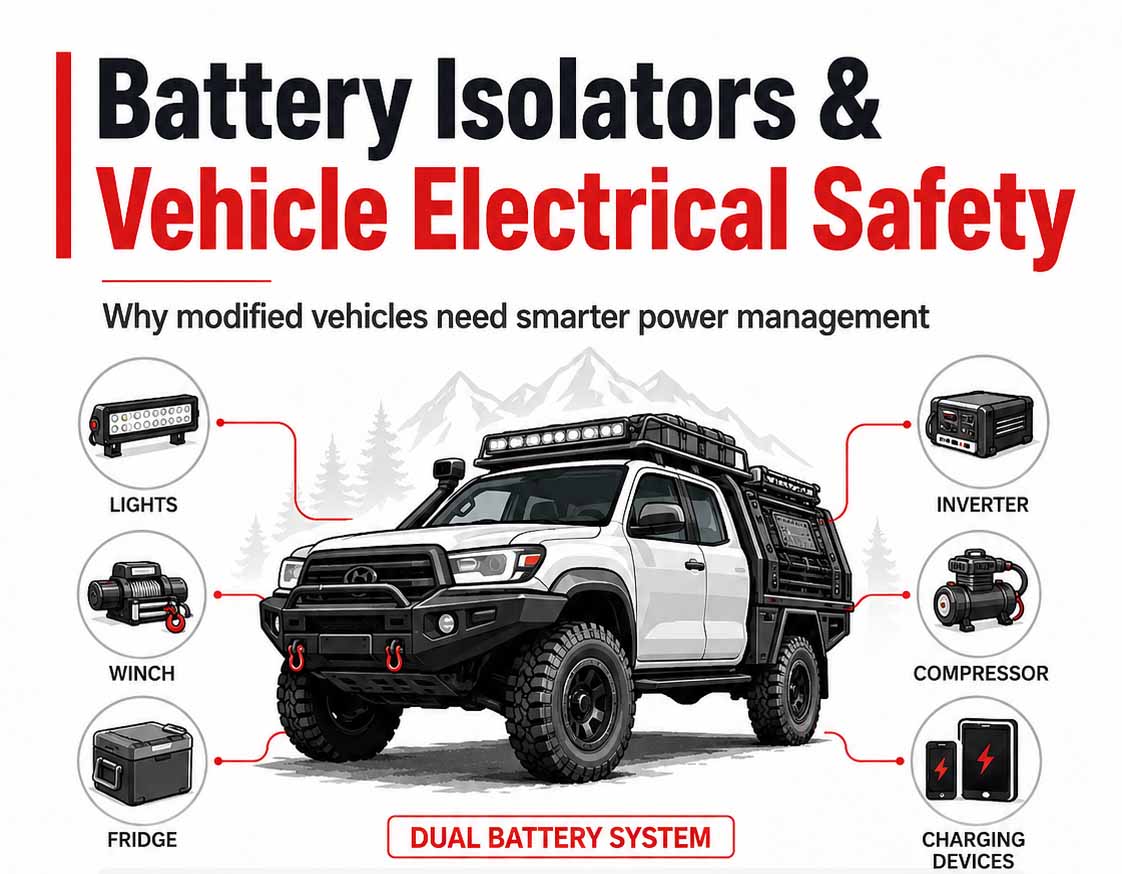
Modern vehicle modifications continue to push factory electrical systems far beyond their original design limits. Off-road vehicles, work trucks, RVs, overlanding rigs, boats, and utility vehicles are now commonly equipped with power-hungry accessories such as winches, refrigerators, lighting systems, inverters, compressors, sound systems, entertainment system, internet equipment, and auxiliary charging devices.
While these upgrades improve functionality and convenience, they also increase electrical demand and create new safety concerns if power management is not handled properly.
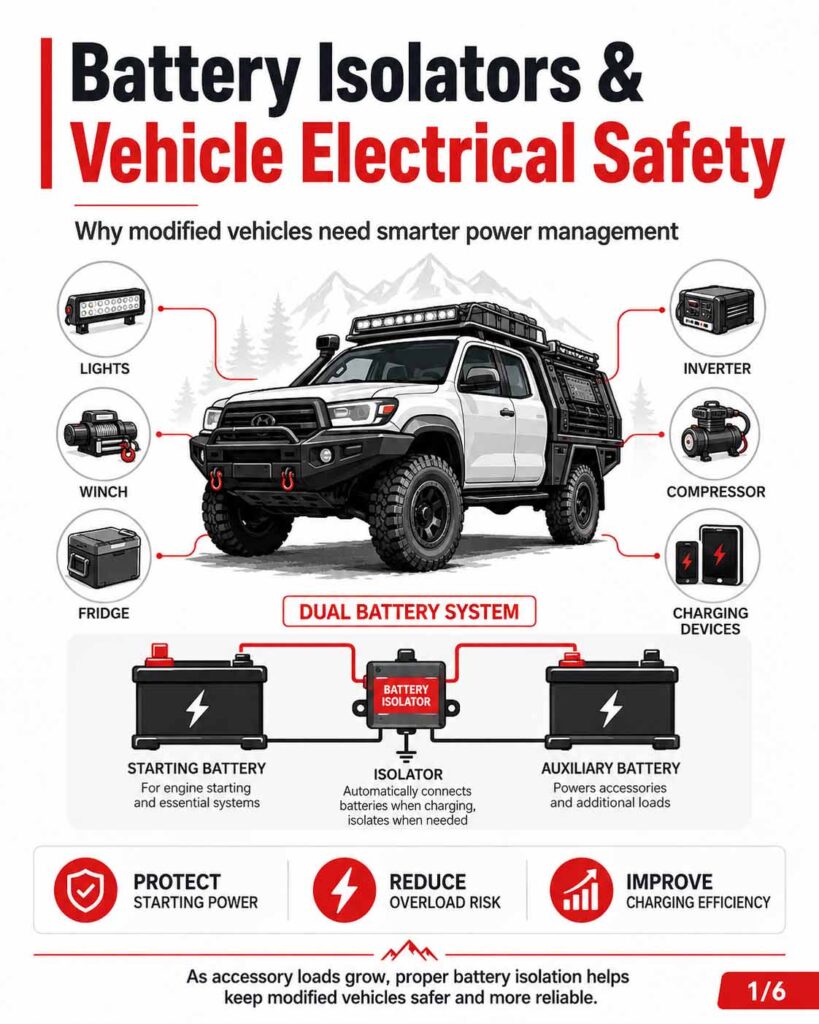
Dual battery system with isolator
One of the most effective ways to improve electrical safety in modified vehicles is through the use of a dual battery system with isolator. These systems are designed to separate the starting battery from auxiliary power sources, helping manage electrical loads more safely and efficiently. As vehicles become increasingly dependent on aftermarket electronics and accessories, battery isolation has become an important component of modern electrical system protection.
Overused battery
One of the biggest risks in modified vehicles is excessive battery drain. When multiple accessories operate from a single battery system, the starting battery may become depleted without warning. This problem is especially common during camping trips, recovery operations, remote work, or extended engine-off accessory use. A drained starting battery can leave the vehicle stranded and create serious safety concerns in isolated environments.
Electrical overload
Electrical overload is another major concern in heavily modified vehicles. Factory charging systems are designed to support standard vehicle operations, not large aftermarket electrical loads. When multiple accessories draw power simultaneously, wiring systems, connectors, and batteries may experience excessive stress. Overloaded systems can generate excessive heat, accelerate component wear, and increase the likelihood of electrical failure.
Heat buildup
Heat buildup caused by poor electrical management is another hidden danger in modified vehicles. Excess resistance from overloaded wiring or poorly balanced electrical systems can create dangerously high temperatures. Over time, this may damage insulation, melt connectors, or create short circuits. In severe cases, overheating electrical components may increase the risk of electrical fires.
Modified vehicles frequently operate in harsh environments where reliability is critical. Off-road trails, marine environments, remote worksites, and long-distance overlanding trips place significant demands on electrical systems. Moisture, vibration, dust, and temperature extremes can all increase the likelihood of electrical issues if systems are not properly protected.
As vehicle modifications become more advanced, electrical safety becomes increasingly important. Many owners focus heavily on performance upgrades and accessories without fully considering the strain placed on the electrical system. Poor power management can eventually lead to unreliable operation, expensive repairs, and potentially dangerous electrical failures.
Benefits of Smart Battery Isolator
Battery isolators help reduce this risk by ensuring the primary starting battery remains protected. The auxiliary battery powers accessories independently while the main battery is reserved for engine starting functions. This separation helps maintain reliable starting power even when high-demand accessories are used for long periods.
- Smart Battery isolators like True brand improve load management by distributing electrical demand more effectively across multiple batteries. This helps reduce strain on the primary electrical system and supports more stable voltage delivery throughout the vehicle. Stable voltage is particularly important for sensitive electronics such as engine control modules, navigation systems, radios, and digital displays, which can be damaged by voltage fluctuations or power instability.
- Proper battery isolation helps minimize these risks by improving current distribution and reducing excessive stress on individual circuits. Professionally installed systems are often designed with heavy-duty wiring, circuit protection, and proper charging management to support safe operation under demanding conditions.
- Battery isolators also improve charging efficiency by allowing both batteries to charge correctly while preventing unwanted power transfer between them. Smart isolator systems can automatically monitor voltage levels and manage charging behavior to protect batteries from over-discharge and unnecessary wear. This not only improves safety but can also extend overall battery lifespan.
Smart battery isolators provide a safer and more reliable way to manage growing electrical demands in modified vehicles. By protecting starting power, stabilizing voltage, reducing overload risks, and improving overall system reliability, battery isolation systems have become an essential part of modern vehicle electrical safety.
Related posts:
- How Battery Isolators Improve Electrical Safety in Modified Vehicles
- The Hidden Risks of Running Multiple UTV Accessories Without Proper Battery Isolation
- Step-by-Step DIY: How to Install a 12V Dual Battery System in Toyota Prado Using True® Isolator Kit
- The “9V Shift Fail”: Protecting the Honda Pioneer Transmission
- Maintenance Tips for Your Dual Battery Setup for Truck
- Top 10 Side-by-Side UTV for Family
- Does Land Rover Discovery need True Smart Battery Isolator Kit?
- How Do You Prevent Battery Cable Corrosion?
- Why Dodge RAM® Needs Dual Battery Kit 1500 2500 and a Wiring Diagram, 12V 140A Isolator System
- Why Toyota Tundra need Dual Battery Kit?
What is a Smart Battery Isolator and What Does a Battery Isolator Do?
What are the different types of battery isolators and their pros and cons?
Does the Placement of a Smart Battery Isolator Affect Performance?